Fire Audit Process in Maharashtra | Certified Fire Safety Agency Guide
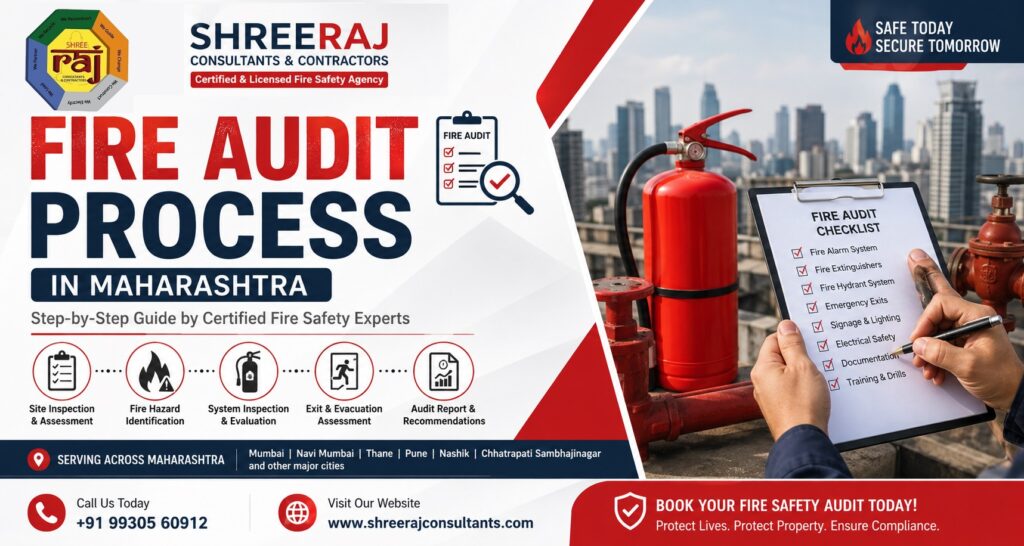
A fire audit is a systematic assessment of a building, workplace, industrial facility, commercial property, hospital, school, hotel, residential complex, or other premises to identify fire hazards and evaluate the effectiveness of fire prevention and life-safety measures.
In Maharashtra, a properly conducted fire safety audit can help organizations identify potential fire risks, improve emergency preparedness, maintain fire protection systems, and work toward applicable fire safety compliance requirements.
ShreeRaj Consultants & Contractors provides professional fire safety audit and fire compliance consultancy services across Maharashtra. As a certified/licensed fire safety service agency, our experienced professionals help businesses assess fire risks and develop practical corrective-action recommendations.
What Is a Fire Audit?
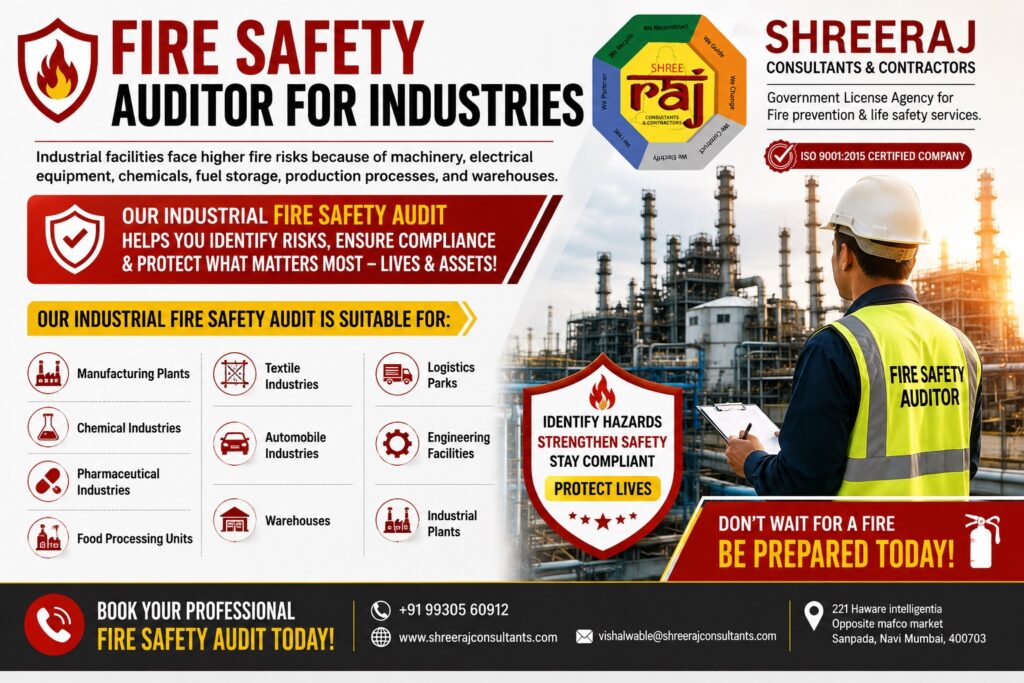
A fire audit is a structured inspection and risk assessment of a premises to determine whether fire prevention, detection, protection and emergency response arrangements are adequate.
The fire audit process generally covers:
- Fire hazards and ignition sources
- Fire detection and alarm systems
- Fire extinguishers
- Hydrant and sprinkler systems
- Fire pumps and water storage
- Emergency exits and escape routes
- Emergency lighting and signage
- Electrical fire hazards
- Fire doors and compartmentation
- LPG and other combustible materials
- Emergency evacuation arrangements
- Fire safety training and preparedness
- Maintenance and inspection records
- Applicable statutory and safety requirements
The objective is not simply to identify deficiencies but to provide a practical roadmap for improving the overall fire and life-safety condition of the premises.
Step-by-Step Fire Audit Process
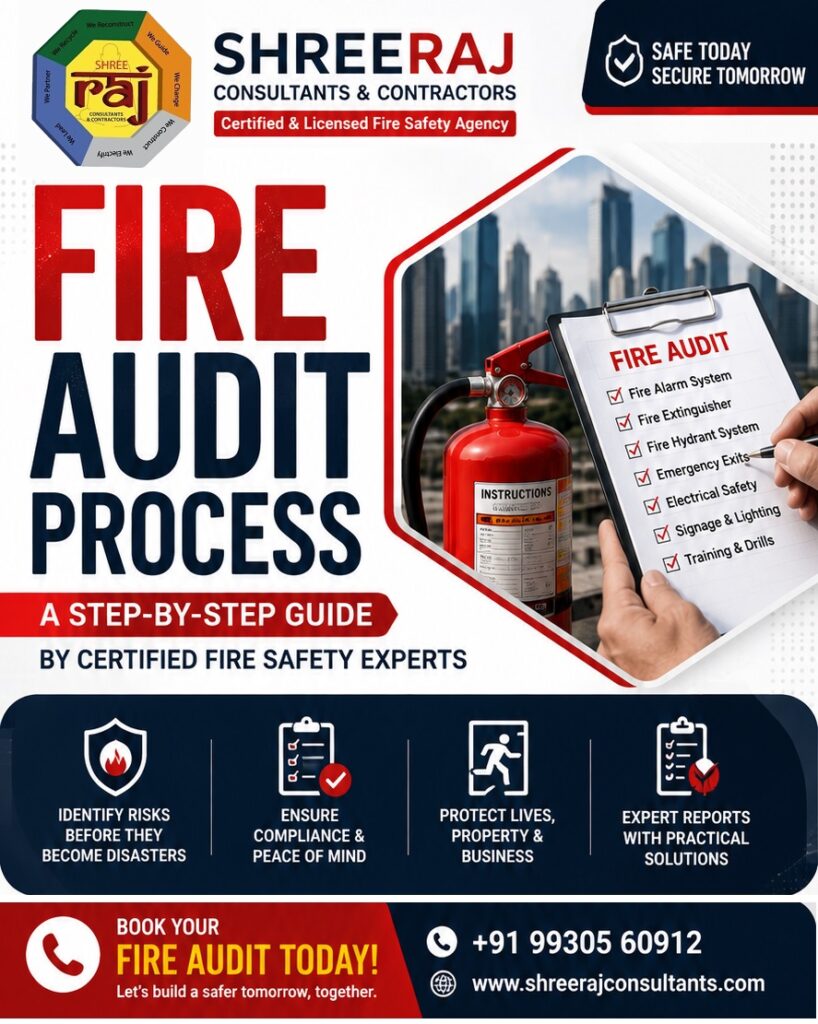
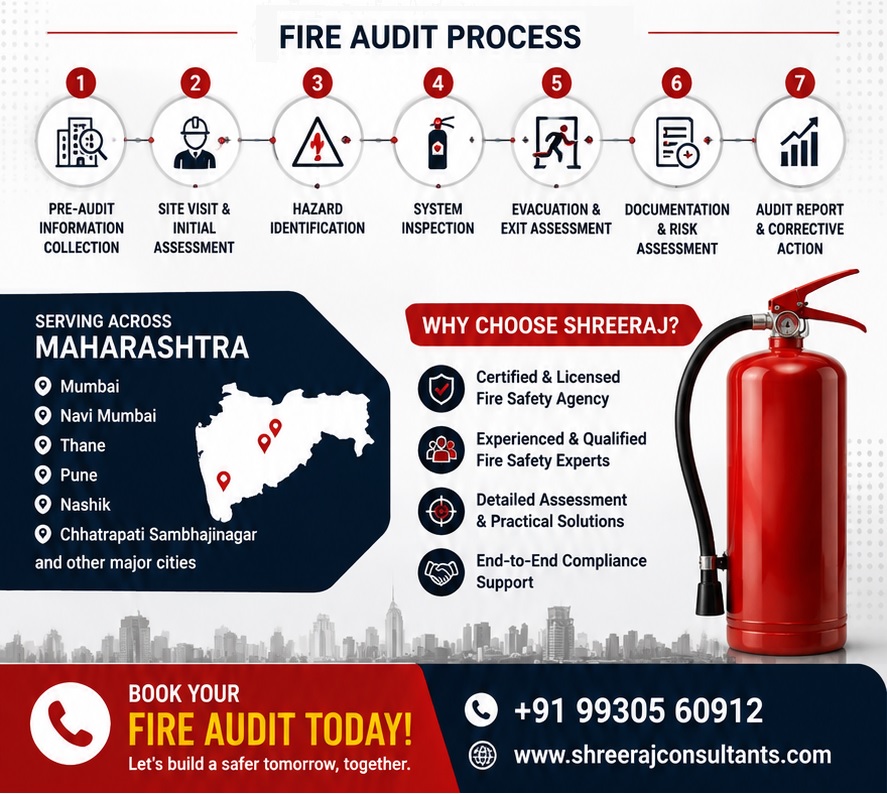
Step 1: Pre-Audit Information Collection
Before visiting the site, the fire safety auditor reviews available information about the facility.
Depending on the property, this may include building plans, occupancy details, previous fire audit reports, fire protection system details, fire safety certificates, maintenance records, electrical information and other relevant documents.
This preliminary review helps the auditor understand the building and identify areas requiring particular attention.
Step 2: Site Visit and Initial Assessment
The next stage is a physical site inspection.
The auditor examines the building layout, occupancy, access arrangements, fire hazards and existing fire protection infrastructure. The auditor may also interact with facility managers and responsible personnel to understand the building’s operations.
A site visit is important because documents alone may not reveal actual conditions such as blocked exits, inaccessible fire extinguishers, improperly stored materials or poorly maintained equipment.
Step 3: Identification of Fire Hazards
During the inspection, potential sources of fire are identified.
Common hazards may include overloaded electrical circuits, damaged wiring, combustible storage, improper housekeeping, blocked escape routes, unsafe LPG storage, hot-work activities, flammable materials and inadequate separation between hazardous areas.
Each identified hazard should be evaluated according to its potential impact and likelihood.
Step 4: Inspection of Fire Protection Systems
A detailed inspection of installed fire protection systems is one of the most important stages of a fire audit.
The auditor checks applicable systems such as:
- Fire detection and alarm systems
- Fire extinguishers
- Fire hydrant systems
- Sprinkler systems
- Fire pumps
- Fire water tanks
- Hose reels
- Fire control rooms
- Emergency communication systems
- Emergency lighting
- Fire doors and related life-safety provisions
The condition, accessibility, maintenance and operational readiness of equipment are reviewed.
Where appropriate, available records and test reports are also examined.
Step 5: Emergency Exit and Evacuation Assessment
A fire emergency requires people to evacuate quickly and safely.
The auditor therefore evaluates emergency exits, staircases, corridors, escape routes, exit signage, emergency lighting and assembly arrangements.
Particular attention should be given to whether escape routes are unobstructed and whether occupants can reach a safe location during an emergency.
For larger facilities, the auditor may also review evacuation plans and fire emergency procedures.
Step 6: Fire Risk Assessment
After collecting information from the inspection, the auditor evaluates the identified risks.
Fire risks can be prioritized according to their potential severity and urgency. High-risk observations may require immediate corrective action, while lower-risk deficiencies can be addressed through a planned improvement program.
A professional fire risk assessment helps management understand which fire safety deficiencies require immediate attention and which improvements should be implemented systematically.
Step 7: Documentation and Compliance Review
Fire safety documentation is reviewed as part of the audit.
Depending on the type and location of the premises, this may include relevant approvals, certificates, inspection reports, equipment maintenance records, fire drill records, training records and other applicable documents.
For organizations operating in Maharashtra, documentation should be maintained properly and updated according to applicable requirements.
Step 8: Fire Audit Report
Following the inspection and assessment, the auditor prepares a detailed fire safety audit report.
A professional report generally includes:
- Property and inspection details
- Scope of the audit
- Fire safety observations
- Identified hazards
- Fire protection system observations
- Compliance-related observations
- Photographic evidence where appropriate
- Risk classification/prioritization
- Recommended corrective actions
- Suggested improvement measures
The report gives management a clear understanding of the existing fire safety condition and the actions required.
Step 9: Corrective Action and Follow-Up
A fire audit should not end with the submission of a report.
The final stage is implementation of recommended corrective measures. Depending on the scope, this may involve repairing or upgrading fire protection systems, improving emergency exits, correcting electrical hazards, enhancing signage, improving housekeeping, conducting fire drills or providing fire safety training.
A follow-up inspection can help verify whether major observations have been addressed.
Why Is a Fire Safety Audit Important?
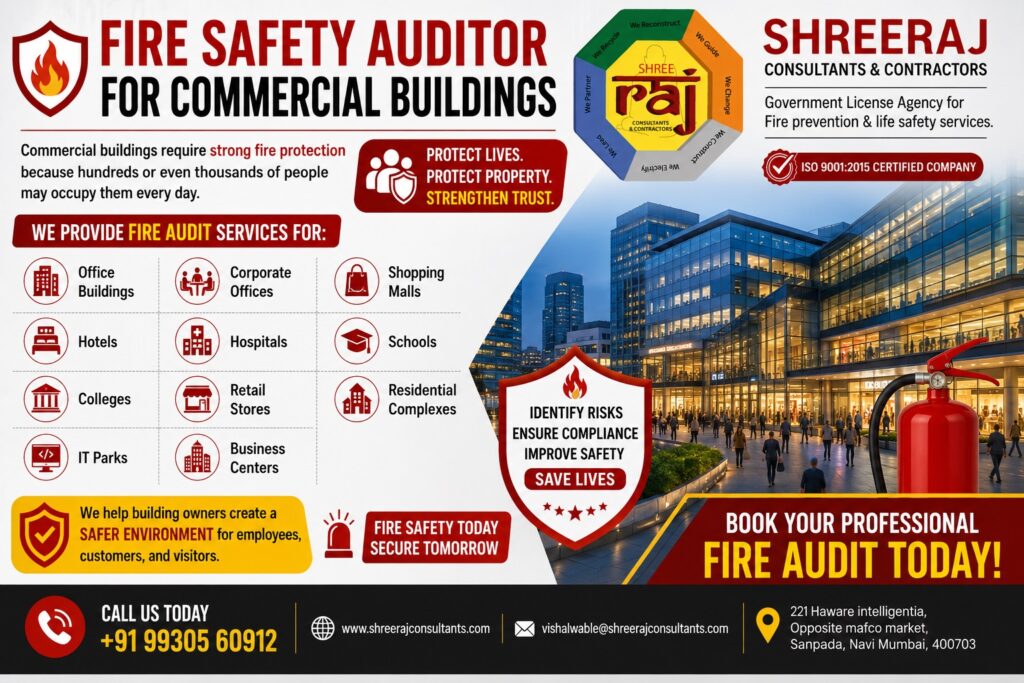
Regular fire safety auditing can help organizations:
Identify hidden fire hazards: Problems can be detected before they contribute to a serious incident.
Improve emergency preparedness: Employees and occupants can better understand evacuation procedures and emergency responsibilities.
Protect life and property: Properly maintained fire protection systems can support faster emergency response.
Improve compliance management: Audits help management identify areas requiring corrective action against applicable requirements.
Reduce operational risk: Preventive measures can minimize the possibility and potential consequences of fire incidents.
Who Should Conduct a Fire Audit in Maharashtra?
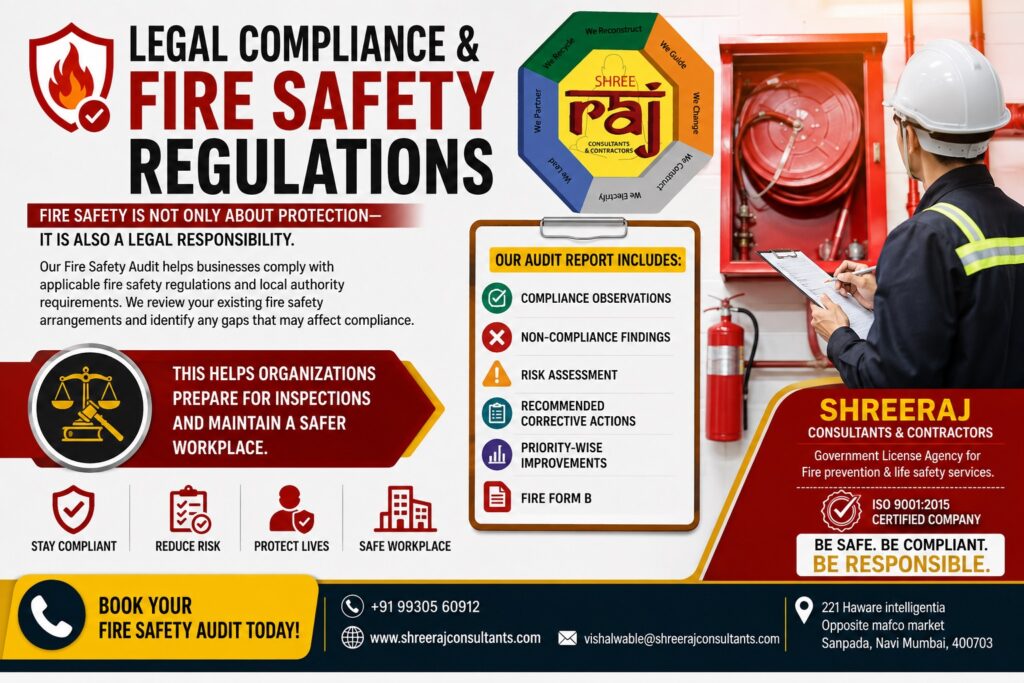
A fire safety audit should be carried out by appropriately qualified and authorized professionals/agencies having relevant experience, technical expertise and understanding of applicable Maharashtra fire and life-safety requirements.
The scope and statutory requirements can vary depending on the building type, occupancy, height, area, risk category and applicable approvals. Therefore, organizations should select a competent licensed/certified fire safety agency rather than relying solely on a general building inspection.
Fire Audit Services by ShreeRaj Consultants & Contractors
ShreeRaj Consultants & Contractors provides professional Fire Safety Audit, Fire Risk Assessment and Fire Compliance Consultancy services for commercial, industrial, residential, institutional and other facilities.
Our approach focuses on:
- Detailed site inspection
- Fire hazard identification
- Fire protection system assessment
- Emergency exit evaluation
- Fire risk assessment
- Documentation review
- Fire audit reporting
- Corrective-action recommendations
- Fire safety compliance support
We serve clients across Mumbai, Navi Mumbai, Thane, Pune, Nashik, Chhatrapati Sambhajinagar and other locations in Maharashtra, subject to project requirements.
Book a Professional Fire Safety Audit
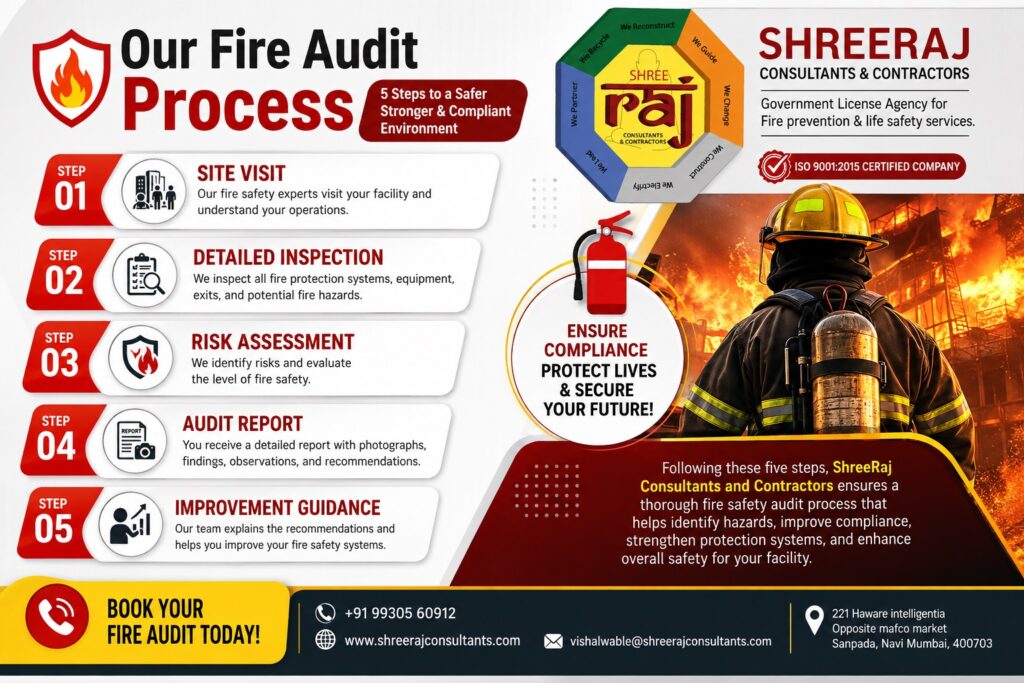
Don’t wait for a fire emergency to discover a safety deficiency.
Get your premises professionally assessed by ShreeRaj Consultants & Contractors — a certified/licensed fire safety service agency.
📞 Call: +91 99305 60912
🌐 Website: https://shreerajconsultants.com/
Schedule your Fire Safety Audit today. Contact ShreeRaj Consultants & Contractors for professional fire audit, fire risk assessment and fire compliance support in Maharashtra.
Frequently Asked Questions
The fire audit process generally includes information collection, site inspection, hazard identification, fire protection system inspection, evacuation assessment, risk assessment, documentation review, preparation of the audit report and corrective-action follow-up.
How often should a fire safety audit be conducted?
The appropriate frequency depends on the type of building, occupancy, risk profile, applicable requirements and changes to the premises or fire protection systems. High-risk facilities may require more frequent assessments.
What does a fire safety auditor check?
A fire safety auditor may check fire alarms, extinguishers, hydrants, sprinklers, pumps, fire water storage, emergency exits, electrical hazards, fire doors, signage, emergency lighting, evacuation procedures, training and relevant records.
Is a fire audit mandatory in Maharashtra?
Fire safety obligations vary according to the type, use, size and characteristics of a premises and applicable regulations. Property owners and facility managers should verify the requirements applicable to their specific premises with the competent authority and qualified fire safety professionals.
Why choose ShreeRaj Consultants & Contractors?
ShreeRaj Consultants & Contractors combines technical fire safety expertise with practical compliance support. Our team helps organizations identify risks, understand deficiencies and plan corrective actions for improved fire and life safety.